

Key Takeaways
- Icy and Ice represent distinct geopolitical boundary concepts with different historical origins and operational frameworks.
- Icy boundaries tend to be dynamic and influenced by fluctuating natural features, while Ice boundaries are more rigid and legally codified.
- The governance and enforcement mechanisms differ significantly, impacting international relations and border disputes.
- Icy boundaries often arise in regions with seasonal or climatic changes affecting terrain, whereas Ice boundaries are typically established in stable geopolitical contexts.
- Understanding the nuances between Icy and Ice is crucial for policymakers involved in territorial negotiations and environmental diplomacy.
What is Icy?
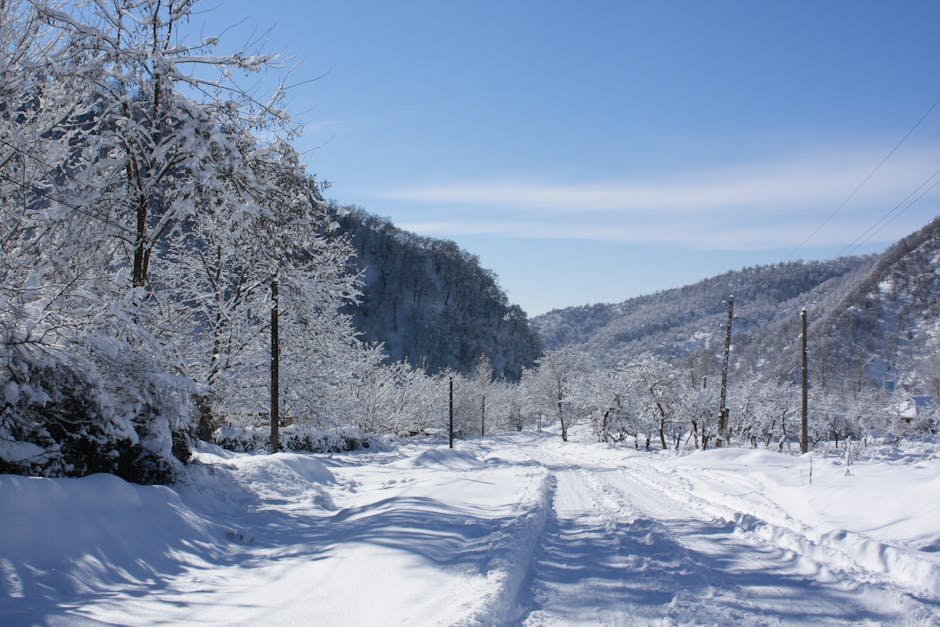
Icy refers to geopolitical boundaries characterized by their association with variable natural elements such as glaciers, frozen rivers, or ephemeral ice formations. These borders are often influenced by environmental conditions that cause their shape and extent to change over time.
Environmental Variability and Boundary Fluctuations
Icy borders are susceptible to environmental shifts, particularly in polar and mountainous regions where ice coverage fluctuates seasonally. This variability can cause changes in the physical boundary line, complicating border enforcement and mapping efforts. For example, the Arctic boundaries between nations like Canada and Denmark can shift due to melting glaciers and sea ice movement. This environmental dependency requires states to adopt flexible legal interpretations when managing Icy borders to avoid conflicts.
Legal Ambiguity and Negotiation Challenges
The mutable nature of Icy boundaries often leads to legal ambiguity, as the physical markers defining these borders are not permanent. Negotiations over such boundaries require continuous diplomatic engagement and adaptive treaties, exemplified by ongoing discussions in the Arctic Council. These legal complexities can stall territorial claims and complicate resource rights in contested icy zones. Consequently, international law must accommodate scientific data and environmental changes in boundary determination.
Impact on Indigenous and Local Communities
Communities living near Icy borders frequently face uncertainties regarding jurisdiction and governance due to shifting lines. Indigenous groups in regions like northern Scandinavia and Siberia experience challenges in accessing traditional lands that cross varying ice boundaries. These boundary shifts affect resource use, mobility, and cultural practices, necessitating inclusive policy frameworks. Engagement with local populations is critical to mitigate social tensions arising from Icy border instabilities.
Strategic and Security Implications
Military and security considerations are heightened along Icy boundaries because of their dynamic nature and strategic locations. Nations bordering the Arctic Ocean, for instance, monitor ice conditions closely to assert sovereignty and control shipping lanes. The unpredictability of ice formations requires flexible defense strategies and international cooperation to prevent escalation. The presence of natural resources under icy terrains also intensifies security concerns in these zones.
Role in Environmental Diplomacy
Icy boundaries serve as focal points for environmental diplomacy, as climate change directly affects their stability and international agreements. Cooperation among Arctic nations to manage the melting ice impacts geopolitical relations and ecological preservation efforts. These borders symbolize the intersection of environmental science and geopolitics, prompting innovative governance models. Managing Icy boundaries involves balancing national interests with global environmental responsibilities.
What is Ice?

Ice in the geopolitical boundary context refers to well-defined, often legally recognized borders that coincide with permanent ice formations or ice-covered territories. These boundaries are generally more stable and formalized through international treaties and cartographic agreements.
Legal Codification and Treaty Frameworks
Ice boundaries are typically established through formal treaties that delineate the border irrespective of minor environmental changes. Examples include the demarcation of borders along ice-covered mountain ranges like the Himalayas. These treaties create fixed points of reference, reducing ambiguity in territorial claims. The legal certainty of Ice boundaries facilitates diplomatic interactions and enforcement of sovereignty.
Fixed Geographic Markers
Unlike Icy boundaries, Ice boundaries rely on permanent physical markers, such as glaciers or perennial ice caps, to define territorial limits. The border between Norway and Russia in the Arctic region is a prime instance where ice formations serve as consistent geographic markers. The permanence of these features provides clarity in mapping and reduces the frequency of disputes. This stability is crucial for resource management and security operations.
Infrastructure and Border Management
Ice boundaries often support infrastructure development such as border posts, checkpoints, and monitoring stations due to their relatively unchanging nature. For example, the US-Canada border in Alaska includes several installations near ice-covered areas to oversee cross-border activities. Stable Ice boundaries allow for more effective customs and immigration control. This infrastructure reinforces national sovereignty and facilitates legal cross-border movement.
Economic and Resource Control
Countries with Ice boundaries frequently exercise clearer control over natural resources found within these zones, including minerals and freshwater reserves. The ice-covered regions of Greenland and Antarctica are governed by international treaties that regulate resource exploitation and environmental protection. The predictability of Ice boundaries aids in drafting resource-sharing agreements and sustainable development policies. This clarity is vital for long-term economic planning and environmental stewardship.
International Stability and Conflict Prevention
The relative permanence of Ice boundaries contributes to geopolitical stability by minimizing territory-related conflicts. Well-delineated ice borders reduce the likelihood of misunderstandings and unilateral actions, as seen in the stable borders of northern European countries. International bodies often use such defined boundaries as benchmarks in mediating disputes. The existence of Ice boundaries exemplifies successful diplomatic boundary-setting in challenging terrains.
Comparison Table
The following table contrasts Icy and Ice geopolitical boundaries across several critical parameters to highlight their distinct characteristics and implications.
| Parameter of Comparison | Icy | Ice |
|---|---|---|
| Boundary Stability | Highly variable due to seasonal and climatic changes. | Generally stable with fixed geographic markers. |
| Legal Certainty | Often ambiguous, requiring adaptive legal frameworks. | Firmly established through formal treaties. |
| Environmental Influence | Directly affected by fluctuating natural ice formations. | Associated with permanent ice features less prone to change. |
| Impact on Local Populations | Creates uncertainty for indigenous and border communities. | Provides consistent jurisdictional clarity. |
| Security Considerations | Requires flexible defense posture due to shifting lines. | Supports fixed military and monitoring infrastructure. |
| Economic Resource Management | Complicated by changing territorial extents. | Facilitates clear resource rights and exploitation. |
| International Dispute Frequency | Higher due to boundary ambiguity and environmental changes. | Lower, with disputes resolved through treaty mechanisms. |
| Diplomatic Engagement | Requires ongoing negotiation and scientific data sharing. | Primarily involves treaty enforcement and compliance. |
| Infrastructure Development | Limited by unpredictable border locations. | Enables permanent border facilities and checkpoints. |
| Role in Environmental Policy | Central to climate change discussions and adaptation strategies. | Key to preserving ice-covered ecosystems under governance. |
Key Differences
- Fluctuation vs. Permanence — Icy boundaries shift with natural ice dynamics, whereas Ice boundaries remain largely constant over time.
- Legal Framework Rigor — Ice boundaries benefit from well-defined international treaties, unlike the often provisional legal status of Icy borders.
- Border Infrastructure Feasibility — Stable Ice borders support permanent facilities, contrasting with the limited infrastructure possible on Icy borders.
- Effect on Indigenous Rights — Icy borders create jurisdictional uncertainty for indigenous peoples, while Ice borders provide clearer governance.
- Environmental Negotiations — Icy boundaries are focal points for adaptive climate diplomacy, reflecting their sensitivity to environmental


