

Key Takeaways
- Pedagogy and Methodology both relate to geopolitical boundaries but serve different analytical and practical purposes in political geography.
- Pedagogy focuses on the educational frameworks and interpretive approaches used to understand and teach about geopolitical boundaries.
- Methodology refers to the systematic methods and techniques employed to study, map, and analyze boundaries between nations and regions.
- Understanding their distinctions enhances clarity when discussing boundary demarcation, territorial disputes, and geopolitical strategy.
- Both concepts are essential for scholars and practitioners working in geopolitics, international relations, and territorial governance.
What is Pedagogy?
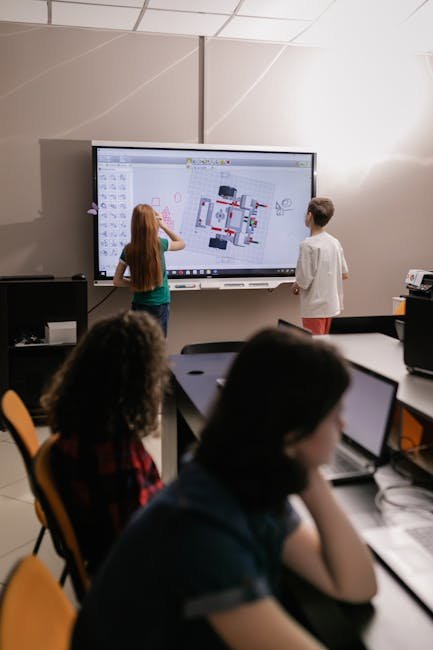
Pedagogy in the context of geopolitical boundaries refers to the educational principles and teaching approaches used to explain and analyze the nature, significance, and impact of territorial borders. It involves how educators and researchers frame the subject matter of boundaries to foster critical understanding among students and policy makers.
Educational Frameworks in Boundary Studies
Pedagogy shapes how geopolitical boundaries are introduced and conceptualized in academic settings. For example, it may emphasize historical evolution, cultural significance, or legal aspects depending on the curriculum design. This framing affects learners’ perspectives on conflicts such as border disputes or secession movements. Educators often integrate case studies like the India-Pakistan border to illustrate the complex realities of boundary politics. The pedagogical approach encourages critical thinking about sovereignty, identity, and international law related to borders.
Interpretive Approaches to Borders
Through pedagogy, boundaries are not presented as mere lines but as socially and politically constructed entities. This interpretive stance helps students appreciate the fluidity and contested nature of borders in global affairs. Pedagogical methods include comparative analyses of different boundary types, such as natural versus artificial borders. For instance, the pedagogical focus might highlight how the Rio Grande functions differently than the DMZ in Korea. Such teaching fosters nuanced awareness of the factors shaping boundary creation and maintenance.
Role of Critical Thinking and Debate
Pedagogy encourages active debate around the legitimacy and consequences of geopolitical boundaries. Students engage with multiple viewpoints, examining the impact of borders on local populations, regional stability, and international relations. For example, discussions might focus on the humanitarian implications of fences or walls erected along disputed lines. This approach nurtures analytical skills and empathy by exploring the human dimension of boundary politics. The pedagogical goal is to prepare informed citizens and analysts capable of addressing boundary-related challenges.
Incorporation of Interdisciplinary Perspectives
Pedagogy in geopolitical boundaries often draws on history, law, sociology, and geography to present a comprehensive view. This interdisciplinary approach enriches students’ understanding of the complexities involved in boundary formation and disputes. For instance, legal frameworks like the United Nations Convention on the Law of the Sea (UNCLOS) may be integrated into lessons on maritime boundaries. Historical narratives provide context for present-day tensions, such as those along the Israel-Palestine border. Combining multiple disciplines highlights the multifaceted nature of borders in global politics.
What is Methodology?

Methodology in the study of geopolitical boundaries encompasses the systematic procedures and tools utilized to investigate, define, and represent territorial divisions. It includes both qualitative and quantitative techniques aimed at producing reliable data and insights about boundary lines and their implications.
Cartographic Techniques and Boundary Mapping
Methodology involves the use of sophisticated cartographic tools to delineate and visualize borders accurately. Geospatial technologies like GIS (Geographic Information Systems) enable analysts to map boundaries with precision, taking into account physical geography and human settlement patterns. For example, satellite imagery is employed to monitor border changes and detect encroachments. These mapping techniques support policymakers by providing up-to-date spatial data critical for negotiation and enforcement. Methodological rigor ensures that boundary representations are standardized and verifiable.
Fieldwork and Boundary Verification
On-the-ground surveys and boundary verification processes are methodological staples in geopolitical studies. Researchers and officials conduct field inspections to confirm the physical markers of borders and resolve ambiguities. For instance, joint boundary commissions may use triangulation surveys to settle disputes between neighboring states. These empirical methods help translate legal agreements into tangible territorial demarcations. Methodology here emphasizes accuracy and impartiality in boundary identification.
Quantitative Analysis of Boundary Impacts
Methodological approaches often incorporate statistical analysis to assess the socio-economic and political effects of borders. Data on migration flows, trade volumes, and security incidents are analyzed to understand boundary dynamics. For example, econometric models may quantify how border controls affect cross-border commerce. This evidence-based methodology informs decisions on border management and regional cooperation. Quantitative techniques provide measurable insights that complement qualitative assessments.
Legal and Documentary Review Processes
Methodology includes rigorous examination of treaties, accords, and historical documents to establish legal boundaries. Scholars apply textual analysis to interpret boundary clauses and understand their implications. For example, reviewing colonial-era treaties helps clarify contemporary disputes in Africa and Asia. This documentary method ensures that boundary claims are grounded in recognized legal frameworks. Methodology thereby combines archival research with spatial data for comprehensive boundary studies.
Comparison Table
The following table outlines key differences in how pedagogy and methodology operate within the study of geopolitical boundaries.
| Parameter of Comparison | Pedagogy | Methodology |
|---|---|---|
| Primary Focus | Educational strategies for understanding boundary concepts | Systematic procedures for investigating and representing boundaries |
| Purpose | To foster critical thinking and interpretive skills about borders | To produce accurate and verifiable data about boundary lines |
| Tools Used | Case studies, debates, interdisciplinary lessons | GIS mapping, field surveys, statistical models |
| Outcome | Enhanced comprehension and awareness among learners | Reliable spatial and legal information for policymakers |
| Scope | Conceptual and theoretical understanding | Empirical and applied research techniques |
| Audience | Students, educators, and analysts | Researchers, surveyors, diplomats |
| Approach to Borders | Explores social, cultural, and political meanings | Focuses on physical demarcation and legal validation |
| Flexibility | Adaptable to various pedagogical goals and contexts | Structured and standardized to ensure accuracy |
| Examples of Application | Teaching the implications of the Berlin Wall | Mapping the India-China Line of Actual Control |
| Role in Conflict Resolution | Promotes dialogue and understanding through education | Provides factual evidence to support negotiations |
Key Differences
- Conceptual vs. Practical Orientation — Pedagogy emphasizes conceptual understanding, whereas methodology focuses on practical application and data collection.
- Audience and Usage — Pedagogy targets learners and educators, while methodology serves researchers and decision-makers.
- Nature of Output — Pedagogical activities produce analytical insights and critical perspectives; methodological work yields precise maps and verified boundary data.
- Adaptability — Pedagogy allows for interpretive flexibility; methodology requires strict adherence to systematic procedures.
FAQs
How do pedagogy and methodology interact in geopolitical boundary studies?
Pedagogy and methodology complement each other by combining theoretical understanding with empirical investigation. Educational frameworks benefit from methodological findings, while methodological approaches gain context through pedagogical interpretation.

