

Key Takeaways
- Stereotypes are often broad assumptions about entire groups or regions, leading to fixed, sometimes inaccurate beliefs about specific territories.
- Generalizations are more flexible, based on observed patterns that can apply to particular areas but are not universally true for all parts within those boundaries.
- Both concepts influence perceptions of geopolitical boundaries, but stereotypes tend to be more rigid, whereas generalizations can adapt with new data or context.
- Recognizing the difference helps in avoiding oversimplified views of countries and promotes more nuanced, informed understandings of regional identities.
- Applying critical thinking to stereotypes and generalizations prevents the perpetuation of misleading narratives about different parts of the world.
What is Stereotype?

Stereotype in the context of geopolitical boundaries refers to a fixed, oversimplified idea or belief about a specific country or region, often based on limited information or cultural narratives. These ideas tend to be resistant to change and shape how people perceive entire populations or territories with broad strokes.
Rigid Perceptions of Countries
Stereotypes create rigid perceptions that can influence diplomatic relations, tourism, and international policies. For example, believing that all residents of a country are aggressive or overly friendly can lead to misjudgments and misunderstandings. These fixed ideas often ignore the diversity and complexity within nations, reducing them to single traits or characteristics.
This rigidity causes significant challenges when trying to foster accurate cultural exchange or cooperative efforts. For instance, stereotypes about the Middle East as a region characterized solely by conflict overlook the rich history, economic vitality, and social diversity present in many countries there. These misconceptions can hinder diplomatic negotiations and economic partnerships.
Moreover, stereotypes are often reinforced through media portrayal, political rhetoric, and personal biases, making them difficult to dispel. When a country is portrayed as dangerous or untrustworthy, it influences public opinion and policy without considering recent developments or regional differences.
Impact on International Relations
Stereotypes influence how countries interact on the global stage, often leading to prejudiced policies, travel restrictions, or biased media coverage. These fixed ideas can foster distrust or hostility, making diplomatic resolutions more complicated. For example, stereotypes about Russia as aggressive or uncooperative have historically impacted diplomatic negotiations and sanctions.
This impact can perpetuate cycles of misunderstanding, where assumptions about one’s neighbor or a distant nation prevent meaningful dialogue. Countries may also use stereotypes to justify political actions, which further entrench negative perceptions and deepen divisions.
At the societal level, stereotypes can lead to discrimination and marginalization of certain populations within borders, affecting minority groups and fueling social tensions. Although incomplete. The perpetuation of such stereotypes often ignores the socio-economic and political factors shaping national identities.
Cultural and Social Consequences
On a cultural level, stereotypes restrict appreciation of regional diversity by reducing entire nations to single traits or narratives. Tourists, for example, may avoid visiting certain countries because stereotypes paint them as unsafe or unwelcoming, impacting local economies.
Socially, stereotypes can influence immigrant integration, where preconceived notions about a country’s people hinder social cohesion. For instance, assumptions that certain nationalities are lazy or untrustworthy can lead to discrimination and social exclusion.
In education and media, stereotypes shape the narratives students and audiences receive about different regions. This can lead to a skewed worldview that ignores the nuanced realities and rich histories of nations, fostering prejudice and misunderstanding.
Limitations and Challenges
One of the main limitations of stereotypes are their inflexibility; they resist change even when presented with new evidence or perspectives. This rigidity hampers efforts to promote understanding and cooperation among nations and cultures,
Challenging stereotypes requires conscious effort and exposure to diverse viewpoints, yet societal and institutional biases often reinforce these fixed ideas. Stereotypes can be embedded in educational systems, media, and political discourse, making them persistent barriers to change.
Furthermore, stereotypes oversimplify complex geopolitical realities, ignoring regional differences within countries. For example, assuming uniformity within large nations like India or China ignores the vast cultural, linguistic, and economic diversity within their borders, leading to misunderstandings.
What is Generalization?
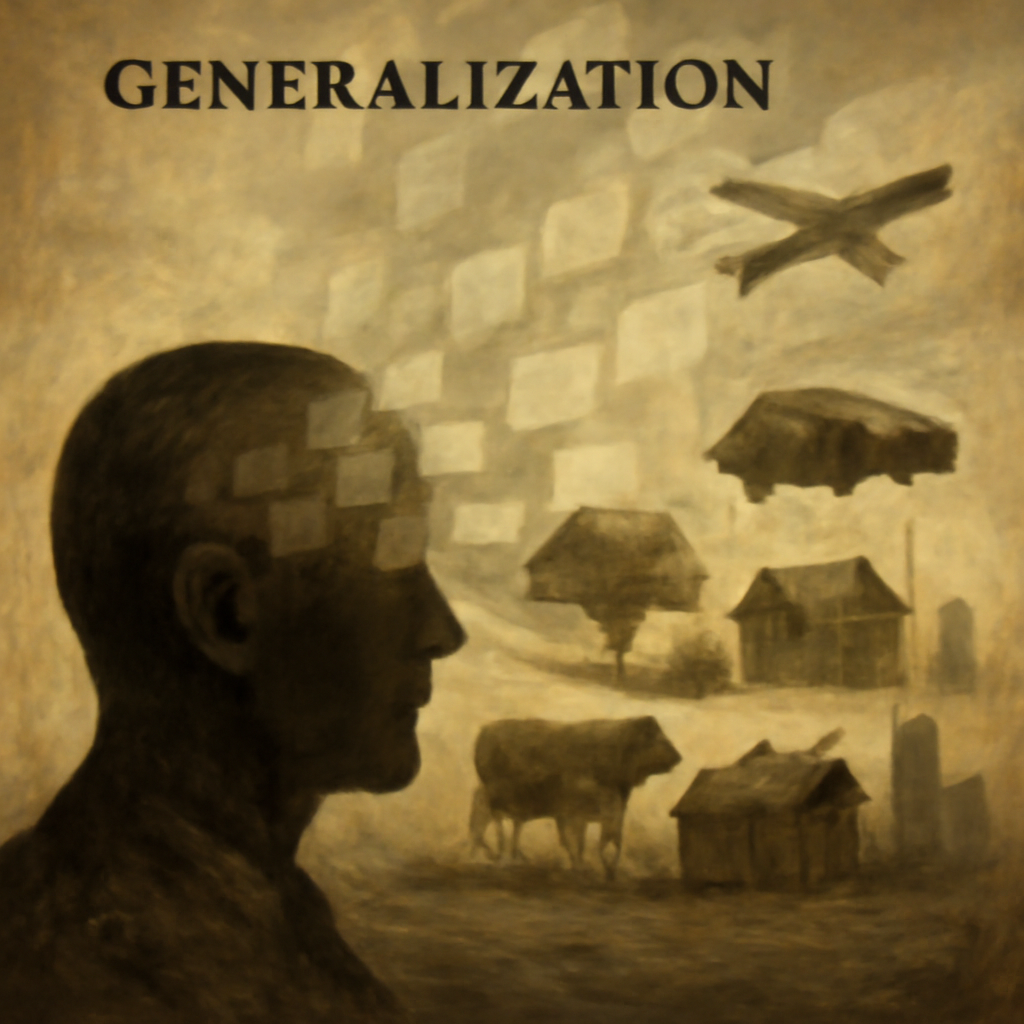
In the context of geopolitical boundaries, generalization refers to an observation or conclusion about a specific region or country based on patterns or trends that are noticeable within certain parts of that territory. Unlike stereotypes, these are more adaptable and open to revision with new data.
Pattern-Based Assumptions
Generalizations are made when certain characteristics, behaviors, or trends are observed repeatedly within a specific country or region. For instance, saying which the southern states of a nation tend to have warmer climates is a generalization based on geographical patterns.
This approach helps in understanding regional differences in terms of culture, economy, or governance without assuming uniformity across entire borders. It allows for nuanced analysis that recognizes diversity while highlighting commonalities where they exist.
For example, a generalized statement about the economic strength of Western Europe recognizes the economic powerhouses like Germany and France but acknowledges that some neighboring countries may have different economic profiles. These generalizations facilitate targeted policy-making and international collaboration.
Context-Dependent and Flexible
One of the strengths of generalizations is their ability to change as new information emerges or as contexts shift. They are not fixed beliefs but rather tools for understanding based on current or observed data. If a new region within a country develops a different economic or cultural trend, the generalization can be updated accordingly.
For example, the perception that Eastern European countries are primarily agricultural has evolved as some nations have become technological hubs. This flexibility makes generalization a valuable analytical tool for policymakers and researchers.
Furthermore, generalizations often serve as the foundation for hypothesis formation, which can be tested and refined over time. They are useful for making initial assessments which guide further investigation or action.
Regional Identity and Diversity Recognition
Generalizations acknowledge the diversity within geopolitical boundaries by highlighting regional identities. They help in recognizing that different parts of a country or continent may have distinct histories, languages, or social norms.
For example, generalizing about Africa as a continent with diverse cultures and economies recognizes regional differences between North Africa, Sub-Saharan Africa, and Central Africa. This nuanced understanding promotes better international engagement and cultural appreciation.
This approach helps avoid monolithic stereotypes that erase the complexity and richness of regional identities, fostering more accurate and respectful perceptions.
Applications in Policy and Development
Generalizations are often used in policy development to tailor strategies for different regions. For example, development agencies may target urban areas differently from rural areas within the same country, based on observed trends.
These insights enable more efficient resource allocation and program design, addressing specific needs without overgeneralizing or ignoring local particularities. A generalization about the economic potential of coastal regions can inform infrastructure investments, but it remains adaptable as new data becomes available.
In diplomatic negotiations, recognizing regional differences within countries helps in crafting agreements that respect local interests and identities. This nuanced approach reduces the risk of conflicts arising from oversimplified assumptions.
Comparison Table
Below is a table comparing key aspects of Stereotype and Generalization within geopolitical boundaries:
| Parameter of Comparison | Stereotype | Generalization |
|---|---|---|
| Basis of formation | Preconceived notions often rooted in biases or media | Observed patterns or trends based on data or experience |
| Flexibility | Rigid and resistant to change | Adaptable with new information or contexts |
| Scope | Overlooks regional differences within borders | Recognizes regional diversity and variations |
| Application | Often leads to oversimplified views | Supports nuanced understanding and analysis |
| Impact on perception | Can reinforce prejudiced or inaccurate beliefs | Encourages informed and context-aware views |
| Resistance to change | High, difficult to correct once established | Lower, can be updated with new data |
| Relation to stereotypes | Often the root cause of stereotypes | Can be a basis for understanding regional differences without bias |
| Complexity | Simplifies entire regions into single traits | Accounts for diversity within regions |
| Use in policy-making | Leads to broad, sometimes unfair policies | Enables targeted, region-specific strategies |
| Potential for change | Limited, often persistent over time | High, can evolve with new insights |
Key Differences
Here are some clear distinctions between Stereotype and Generalization:
- Origin of belief — stereotypes stem from biases and misconceptions, while generalizations arise from patterns observed through data or experience.
- Flexibility — stereotypes tend to be fixed and resistant to change, whereas generalizations can be revised with new evidence or changing circumstances.
- Scope of application — stereotypes ignore regional differences within borders, while generalizations acknowledge and incorporate those variations.
- Impact on perceptions — stereotypes often lead to unfair or inaccurate views, while generalizations promote more accurate, context-based understanding.
- Potential for correction — stereotypes are difficult to change once ingrained, but generalizations are adaptable and can be refined over time.
- Role in decision-making — stereotypes can distort policy and social interactions, whereas generalizations serve as useful tools for targeted planning and analysis.
FAQs
How do stereotypes influence media portrayals of countries?
Stereotypes often shape the way media depicts nations, emphasizing exaggerated or one-dimensional images that reinforce misconceptions. Although incomplete. This can lead to biased news coverage, skewed narratives, and misinformed public opinions, affecting international relations and cultural perceptions.
Can generalizations lead to misunderstandings despite being more flexible than stereotypes?
Yes, if generalizations are overused or applied without considering exceptions, they can still cause misunderstandings. While they are based on patterns, they should be used cautiously, recognizing that within any region, there are diverse experiences and traits that may not fit the general trend.
How do stereotypes and generalizations affect regional policy development?
Stereotypes can lead policymakers to adopt one-size-fits-all strategies that overlook local needs, potentially causing ineffective or unfair policies. Although incomplete. Conversely, well-informed generalizations can help tailor interventions to regional realities, improving effectiveness and fairness,
What role does education play in reducing harmful stereotypes about regions?
Education that emphasizes regional diversity, historical context, and critical thinking can challenge stereotypes by exposing students to multiple perspectives. Promoting direct contact with different cultures and factual knowledge helps dismantle oversimplified views and fosters more accurate understanding.
