

Key Takeaways
- Strongholds are typically defined as regions or cities under firm control by a political or military power, acting as centers of influence within contested territories.
- Fortresses are physical, heavily fortified military constructions designed to defend strategic locations and withstand prolonged sieges.
- While strongholds emphasize control over population and territory, fortresses focus primarily on defense through architectural and structural means.
- Strongholds often serve as administrative and symbolic centers influencing broader geopolitical dynamics, whereas fortresses serve tactical military purposes.
- The evolution of warfare and territorial administration has shaped the differing roles and characteristics of strongholds and fortresses in geopolitical contexts.
What is Stronghold?
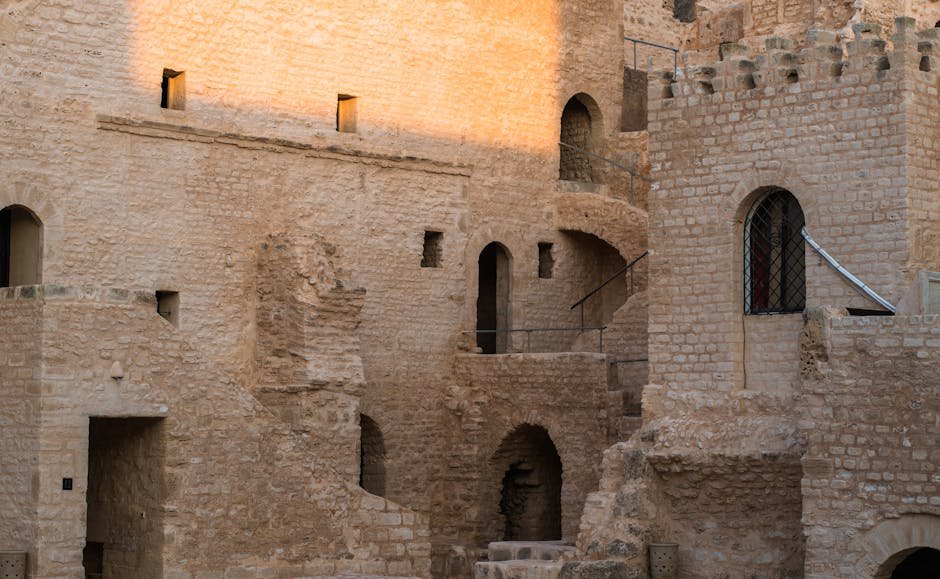
A stronghold refers to a geographical area or settlement where political or military authority is firmly established, often amidst conflict or unrest. It functions as a bastion of control, securing influence over surrounding regions and populations.
Role in Territorial Control
Strongholds act as centers of governance and influence within contested or unstable regions, providing a base from which powers project authority. They are essential in maintaining territorial integrity by anchoring loyal populations and administrative functions.
For example, during the medieval period, a city held as a stronghold could serve as a hub for a regional lord’s power, controlling trade routes and local militias. This control extends beyond mere defense, encompassing political stability and resource management within the area.
Political and Symbolic Importance
Strongholds often carry significant symbolic weight, representing the legitimacy and resilience of the controlling entity. Their possession can bolster morale and deter adversaries by demonstrating sustained dominance.
In the context of civil wars or insurgencies, controlling a stronghold may signal the strength of a faction, influencing both internal supporters and external observers. The fall or retention of such a place can shift the balance of power dramatically.
Population and Socioeconomic Influence
Unlike purely military installations, strongholds incorporate civilian populations, serving as centers of commerce, culture, and social organization. This integration makes them critical for sustaining long-term control over a region.
Historical examples include cities that doubled as strongholds by supporting economic activities that funded military efforts and governance. The interaction between military and civilian spheres in strongholds is key to their strategic value.
Strategic Location and Accessibility
Strongholds are often situated at vital crossroads, river confluences, or resource-rich areas, maximizing their strategic importance. Accessibility allows for supply lines and reinforcements, which are crucial during conflicts.
For instance, controlling a mountain pass or a port city as a stronghold can secure trade and military movements, conferring an advantage over opposing forces. Their location is chosen to balance defensibility and operational reach.
Adaptability Over Time
Strongholds evolve with changing political landscapes, sometimes shifting from military bastions to administrative centers or vice versa. Their function adapts according to the needs of the ruling power and the nature of external threats.
This flexibility can be seen in historical strongholds that transformed into capitals or economic hubs after periods of conflict, maintaining relevance beyond warfare. Such evolution reflects the complex role strongholds play in geopolitical stability.
What is Fortress?

A fortress is a fortified structure or complex built primarily for defense against military assault, designed to protect strategic points such as borders, cities, or military bases. It serves as a physical barrier and a base for launching military operations.
Architectural Design and Defensive Features
Fortresses are engineered with thick walls, bastions, moats, and other defensive elements to resist attacks and sieges. Their design often incorporates the latest military technology of their time to enhance survivability.
Examples include star forts developed in the Renaissance, which featured angled bastions to deflect cannon fire, underscoring the evolving nature of fortress design. These constructions prioritize defense over habitation or administrative functions.
Military Function and Tactical Use
Fortresses serve as strong points on the battlefield, providing safe havens for troops and storage for arms and supplies. They enable defenders to hold ground against numerically superior forces by leveraging architectural advantages.
Historically, fortresses were crucial during prolonged conflicts, allowing defenders to withstand sieges while controlling key routes or borders. Their placement often determined the success of military campaigns.
Geopolitical Significance
Beyond their immediate defensive purpose, fortresses mark territorial boundaries and signal control to potential adversaries. They act as deterrents by projecting military strength and readiness in contested zones.
For example, the network of fortresses along the Great Wall of China served not only as defense but also as a geopolitical statement to neighboring entities. Fortresses thereby contribute both tactically and strategically to a state’s security apparatus.
Limitations and Vulnerabilities
Despite their strength, fortresses can become liabilities if isolated or bypassed by enemy forces using maneuver warfare or siege technologies. Their fixed nature limits flexibility in rapidly changing combat scenarios.
Advancements such as artillery and air power in the modern era have reduced the effectiveness of traditional fortresses, necessitating new approaches to military defense. Consequently, many historic fortresses have transitioned to symbolic or heritage roles.
Legacy and Modern Adaptations
Many historic fortresses have been preserved as cultural landmarks, reflecting the military architecture and geopolitical tensions of their eras. Some modern military bases incorporate fortress-like elements to protect critical assets.
The enduring presence of fortresses in military doctrine illustrates their foundational role in shaping defense strategies, even as technology continues to evolve. Their legacy informs contemporary discussions on territorial security and infrastructure resilience.
Comparison Table
The following table highlights distinct attributes of strongholds and fortresses across various geopolitical dimensions:
| Parameter of Comparison | Stronghold | Fortress |
|---|---|---|
| Primary Function | Center of political-military control and population governance | Defensive military installation designed to repel attacks |
| Structural Composition | Often urban or semi-urban with mixed civilian and military elements | Primarily stone or reinforced fortifications with military-focused architecture |
| Role in Warfare | Maintains regional dominance and supports administrative command | Serves as strongpoint for tactical defense and siege resistance |
| Population Presence | Includes civilian inhabitants and economic activities | Limited or no civilian population; military personnel only |
| Symbolic Influence | Represents legitimacy and authority in contested regions | Demonstrates military strength and territorial claims |
| Strategic Location | Located at crucial political or economic crossroads | Placed at vulnerable border points or key military routes |
| Mobility and Adaptability | Can evolve into administrative or economic centers over time | Fixed structures with limited flexibility in modern warfare |
| Historical Examples | Medieval fortified cities like Constantinople as a power base | Castles and star forts such as Fort Bourtange in the Netherlands |
| Response to Modern Threats | Transforms into political hubs or urban centers | Often obsolete without modernization or repurposing |
| Role in Civil Unrest | Acts as a rallying point for control amid internal conflicts | Functions as secure military bastion during sieges or rebellions |
Key Differences
- Definition and Scope — Strongholds encompass broader territorial and administrative control, while fortresses are specific physical defensive
